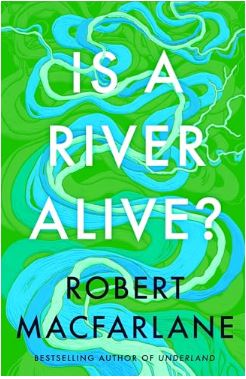
"Is A River Alive?"
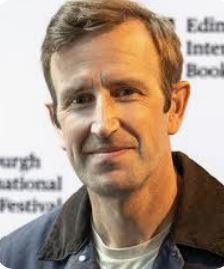
by Robert Macfarlane.
Robert Macfarlane is Professor of Literature and Environmental Humanities at the University of Cambridge and is a well established writer on environmental matters.
“Is a River Alive?” took over 4 years to write and was published in 2025.
On the face of it, this is a philosophical question containing the question, “What does it mean to be alive”?
And is there a definition of “alive” that can be applied, meaningfully, to rivers?
Macfarlane takes the question further to “How can a river have rights that have legal standing?”.
Macfarlane explores the questions using four rivers.
Macfarlane’s own river, the river Cam, a chalk river” provides a background for the 3 major sections.
Part 1, The cedars, Los Cedros. Ecuador.
Los Cedros is a “cloudforest” and is under threat from mining; but hope has grown via the Ecuadorean Government passing a Rights of Nature law.
Macfarlane ravels with fantastical characters; Terry Pratchett’s imagination is pale compared to this reality.
The funghi lady (Woo-hoo) shines through because of her “connection” to the living world.
The chapter takes the reader to a philosophical view that the forest is a conscious whole being. (p97).
This fits well with other writing e.g. Paul Bennet’s, “Voyage of Purpose”, and his meditative approach to experiencing nature.
Importantly, the chapter is not “all doom and gloom”, there is much that is positive about what can be achieved even by relatively remote and seemingly powerless people.
Robert visits his local springs which have been decorated, much like St Helen’s well near Market Weighton.
Part 2 Chenai, India, Ghosts
Starts with bad news – good news. Bad news of dying rivers, rivers erased from maps by institutional greed.
But also the good news of a character that remained positive in spite of almost the worst possible start in life and turned the situation round, remarkably.
Fantastic character – the “insect man”.
The whole part 2 is an emotional roller-coaster of the inter-section of rivers, mankind, pollution and wildlife survival.
What a dedicated activity! - rescuing turtle eggs by the thousand, one by one.
Part 3 Canada
The reader is hit immediately by the immense size of the country.
The river, and the whole regional environment is threatened by the proposal to build a dam across the river that would flood back for many miles.
What fantastic writing, his roller coaster journey really is reflected in the pace, tone and content of the writing.
Absolutely superb.
This section could be read in several different levels
As simply a travelogue –
a quite exciting travelogue, pp236 /7 one sentence reflecting the changing pace of the river, 30 lines.
Robert talks about this in his video: “How I Write” – see below.
As a political diatribe.
Who could ruin such pristine wilderness by building dams with all the attendant infrastructure damage?
Or as a spiritual journey.
Undertaken with the blessing of the river, but immersively viewed as if nature is one integrated system.
Certainly both Albert Einstein and John Donne shared this viewpoint.
Throughout the journey, Robert honours the injunction to camp facing the rising sun, and to give a gift to the river and to the land every day.
This feels a bit like a form of animism.
Reaction to the book
Both the quality of the writing and the importance or rivers in our lives made this book into a very enjoyable to read for club members in spite of the negative emotions associated with environmental destruction.
Interesting points:
People that have lived “primitive” lives for thousands of years, such as the Australian Aboriginals, and the North American Innuit, have deep connections to the land, and flora and fauna (and funghi),
This then is a view in total opposition of the “Western World” view that nature is a resource to be exploited.
The book embraces both despair and hopefulness in surveying the fate of rivers in the various countries.
Animism, monotheism, are these compatible, or integral, or in conflict?
Further
Rereading sections and listening to Robert talking on YouTube deepens the thinking and philosophy.
- How 17thC science opened the imagination and our sense of awe at the natural world. (Blake, grain of sand 1803)
- How his writing and Robert as a person changes with each book
- How his writing style alters to create the effects that he wants to evoke in the reader
Other comments made during the review
Positive
- A dense and weighty tome
- The book flowed and carried me along like a river
Negative
- One reader felt that the river journey in Canada could not have been undertaken without logistical support, but nothing is mentioned in the book,
and if this had been the case there would have been no need to fly to the head of the lake.
- Google Maps reveals that there are no roads in that area
- How many rivers have been forced underground in London?
Interesting
- One member read “Is a River Alive?” along with “Just Earth: How a Fairer World Will Save The Planet”.
- Hull City Council twice tried to turn Farndale into a drinking water reservoir, this was debated in Parliament 3rd March 1969.
- There are many YouTube videos of Robert Macfarlane in conversation, many cover the same topics, the first two shown below are highly recommended.
Doorly score: 4.25
PC. June 13th 2026
References:
|